
Website Design
7 months
Unilever partnered with The DO to build StepZero, a platform connecting brands with sustainability-focused influencers (creators). The challenge: design a platform from scratch that served two very different user types — creators who needed motivation and clear rewards, and brands who needed to find and vet authentic sustainable advocates. I joined at the concept stage and designed the platform end-to-end over 7 months: from user journeys and points mechanism through to information architecture, wireframes, and final visual design.
The Users
01
The Influencers (Creators)
The influencers on StepZero, referred to as creators, are individuals known for their commitment to sustainability. They actively create content that reflects their dedication to environmental causes. These creators engage with the platform by interacting with articles, blogs, and other content. They also pledge to promote sustainability through their collaboration with brands.
02
The Brands
Both Unilever and non-Unilever brands can use the platform to find creators who align with their values. These brands seek creators who can authentically promote their sustainable or environmentally friendly products.
User Journey
To understand the experience from the creator's perspective, I mapped out their user journey. This helped visualize how a creator would navigate the platform and interact with its features at various stages.
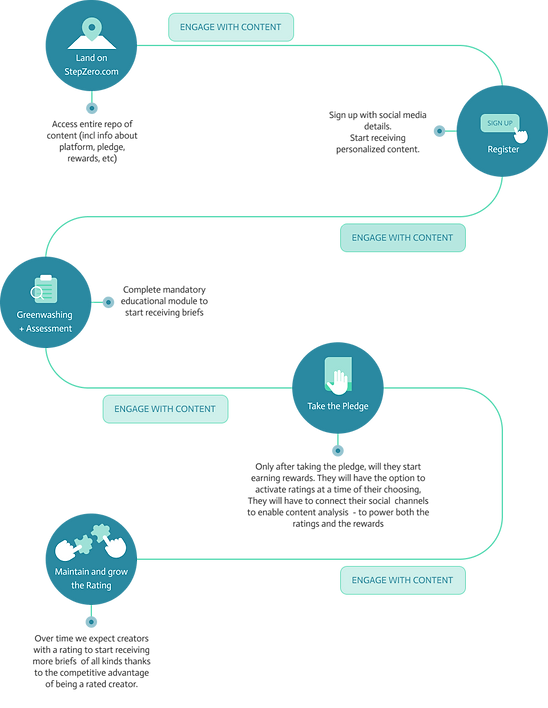
Additionally, I developed a points mechanism to reward creators based on their engagement. Points were allocated depending on their interactions with content and brands.

Information Architecture
Once the user journey was clearly defined, I created the information architecture to serve as the foundation for the website’s design and structure.

Initial Wireframes
Based on the information architecture, I created initial wireframes to outline the key features and functionalities of the platform, ensuring that both creators and brands could easily navigate and accomplish their goals.


Key Decisions
Why a points mechanism over other engagement models
Early in the project, we explored several ways to motivate creators to stay active on the platform — follower growth tools, exclusive brand access, and direct monetary reward. We chose a points-based mechanism for three reasons: it created a visible, ongoing sense of progress that kept creators returning; it allowed us to reward different types of engagement (reading content, completing pledges, promoting products) without putting a fixed monetary value on each; and it gave brands a transparent signal of creator commitment before entering a collaboration. A monetary model would have made the platform transactional and undermined the authentic sustainability positioning that was core to StepZero's identity.
How the dual-user structure shaped the IA
Serving two very different users — creators and brands — on the same platform is an IA challenge. We considered a single unified experience where both users saw the same interface. Early wireframe testing showed this created confusion: creators kept encountering brand-facing content and vice versa. The decision was to design clear entry-point separation, where a creator lands on a dashboard built entirely around their journey (content, points, pledges, collaborations) and a brand lands on a discovery and matching interface. The underlying data is shared, but the interface is completely distinct. This decision came directly from testing the first wireframe prototype with two creator participants who both asked "what is this section for?" when they encountered brand tools.
Making sustainability feel aspirational, not preachy
One creative challenge was tone. Sustainability content can easily feel guilt-driven or lecture-like, which would repel the influencer audience we were designing for. In the visual design phase, we made a deliberate choice to use the visual language of lifestyle platforms — warm photography, clean typography, reward-driven UI patterns (streaks, badges, progress bars) — rather than the NGO-style greens and earth tones typically associated with environmental content. The goal was to make engaging with sustainability content feel like something worth sharing, not something you do out of obligation.
Visual Design
The next step was to translate the wireframes into a visually appealing design, focusing on a clean, intuitive interface that reflects the platform’s mission of sustainability.


The outcome
StepZero launched as a live platform. My design established the creator onboarding flow, the points and rewards system, brand-creator matching, and the content engagement loop that drove creator activity on the platform.